
The Archive
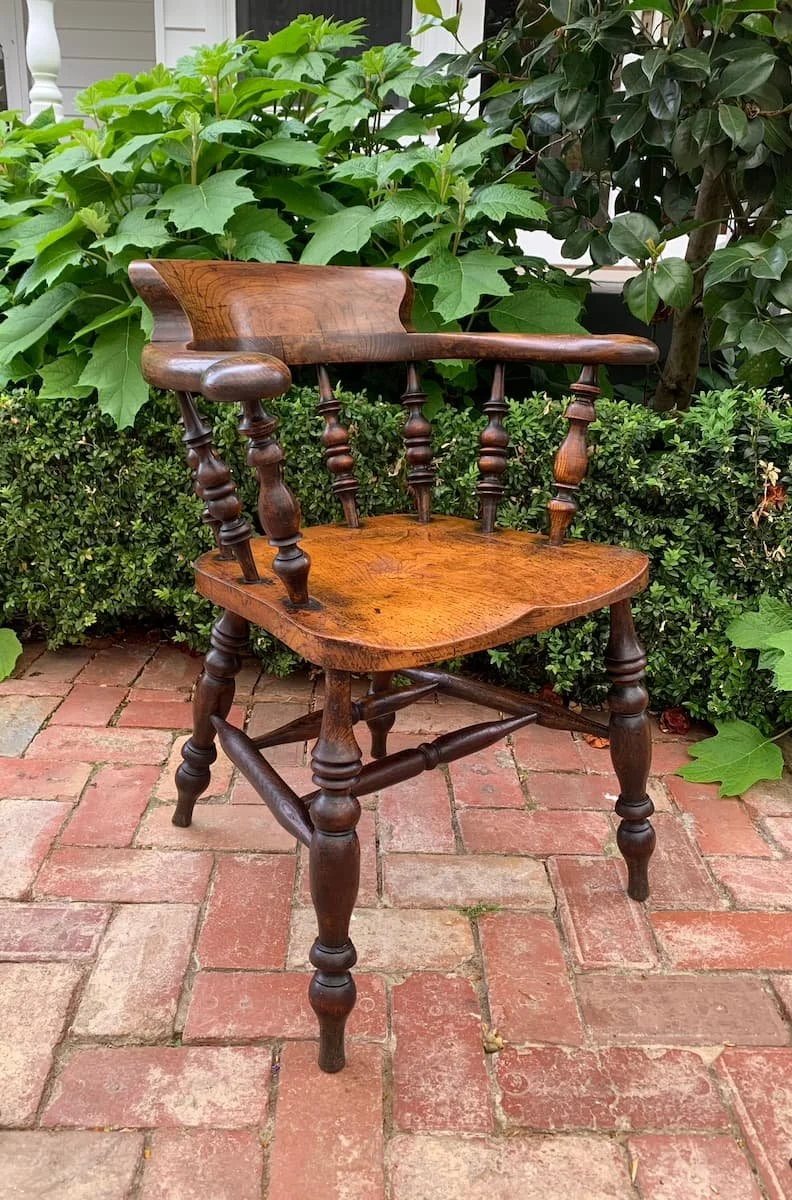
A handsome 19th century English elm smoker's bow chair, the form more familiarly known as a captain's chair or pub chair, and much sought after for its low, sociable stance and generous horseshoe arm rail. The shaped saddle seat is worked in solid elm, its figure and colour deepened by a wonderful old patina built up over more than a century of use. A gallery of turned spindles rises to the sweeping arm rail, itself terminating in rounded knuckle ends, while the sturdy turned legs are united by a double stretcher for extra rigidity — a hallmark of the best examples of the type.
Originally designed for pubs, clubs and smoking rooms, where its wide seat and enclosing arms made it the most comfortable chair in the room, this example remains in fine, solid condition and is genuinely comfortable to sit in today. It would suit equally well as a desk or occasional armchair, or simply as a well-loved reading chair.
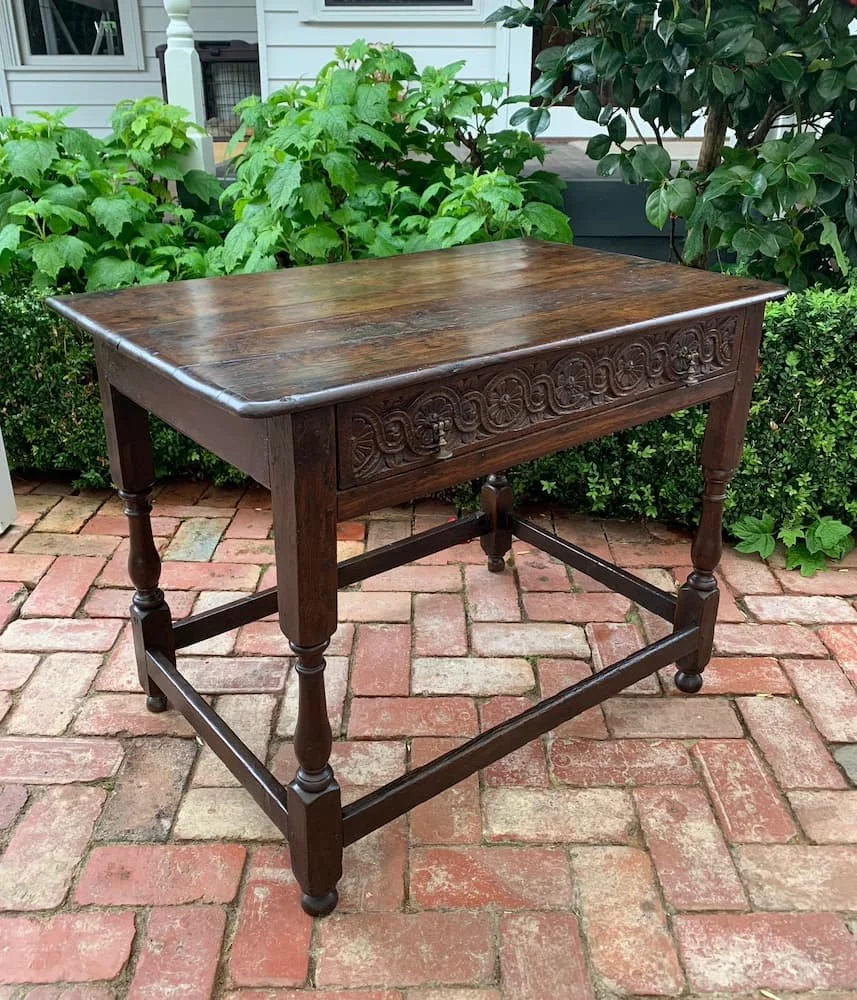
A handsome piece of period oak furniture, this English side table dates to the early 18th century. The rectangular top displays pleasing colour and patina above a single frieze drawer carved in a continuous guilloche and rosette design flanking a pair of brass drop handles, apparently original to the piece. The table stands on four baluster turned legs united by a box stretcher, terminating in bun feet. Honest wear and age-appropriate colour throughout, with minor splits to the top boards consistent with a piece of this age and construction. A versatile size well suited as a hall, lamp, or occasional table.
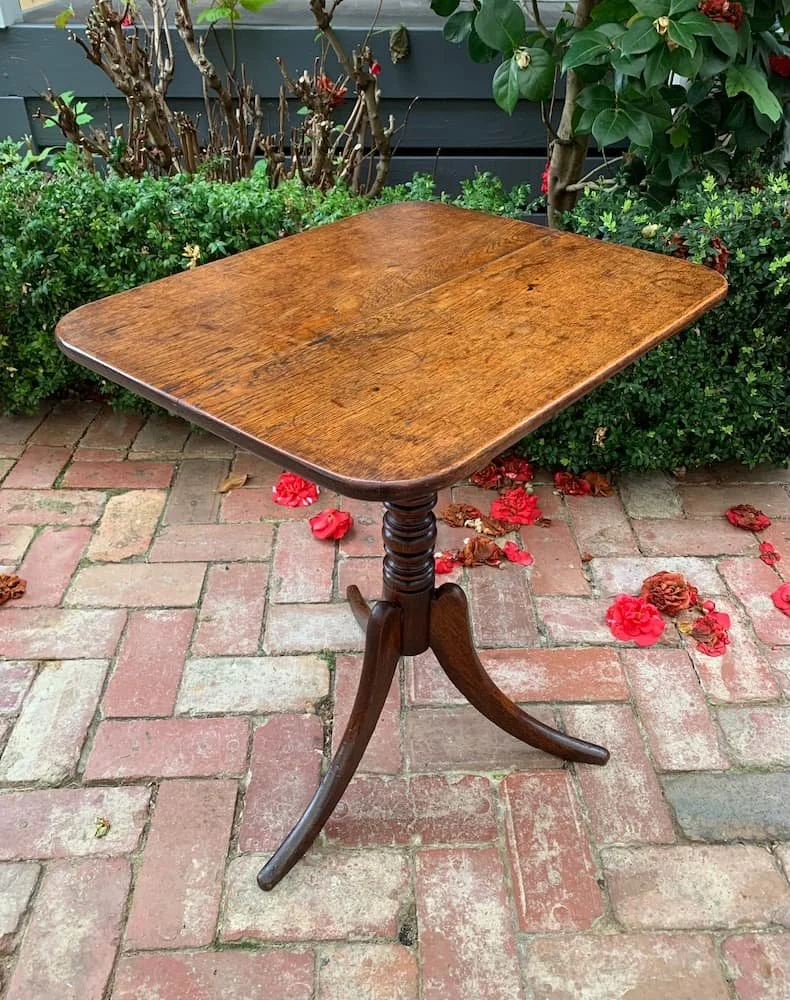
A handsome Georgian oak tilt-top lamp table, Circa 1800-1820, standing on a turned baluster column with ring-turned detailing above a swept tripod base. The rounded rectangular two-plank top tilts to vertical for storage against a wall, a practical feature typical of the period.
The oak has developed a lovely rich patina and colour with age, the grain well figured across both boards. Condition is sound and stable, commensurate with age, with minor surface marking consistent with two centuries of honest use. A versatile size, equally suited as a lamp table, wine table, or occasional side table.
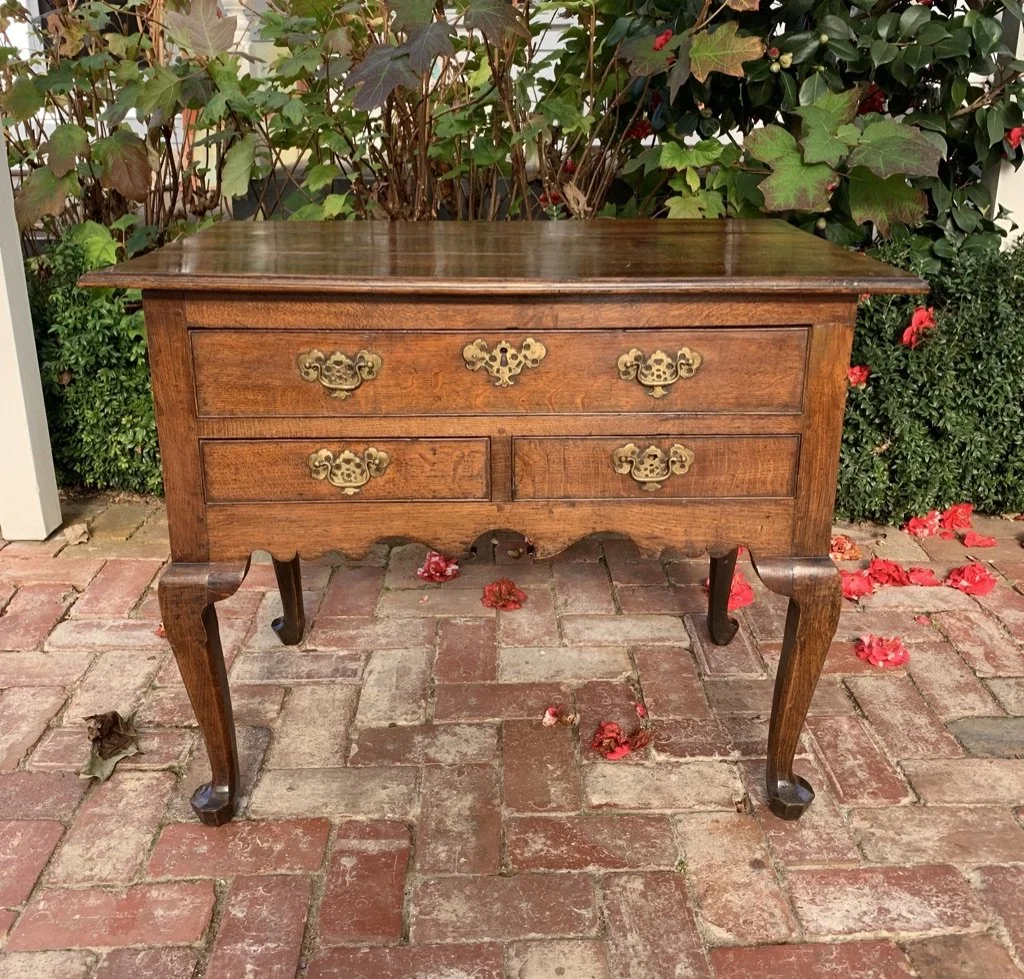
A well-proportioned George II oak lowboy, English, circa 1730–1750. The solid oak three-plank top sits above a case fitted with one long drawer over two short, each retaining their original brass bat's-wing handles and escutcheons. The shaped and scalloped apron below lends the piece a lively silhouette, carried through into the four cabriole legs terminating in pad feet — a form characteristic of the mid-Georgian period in English provincial cabinetmaking.
The oak throughout has developed a rich, warm patina consistent with its age, and the piece retains good honest surface. The cabriole legs are well-cut with a clean knee, and the overall scale is practical for contemporary use as a side table, lamp table, or hall piece.
Offered in lovely period oak condition.
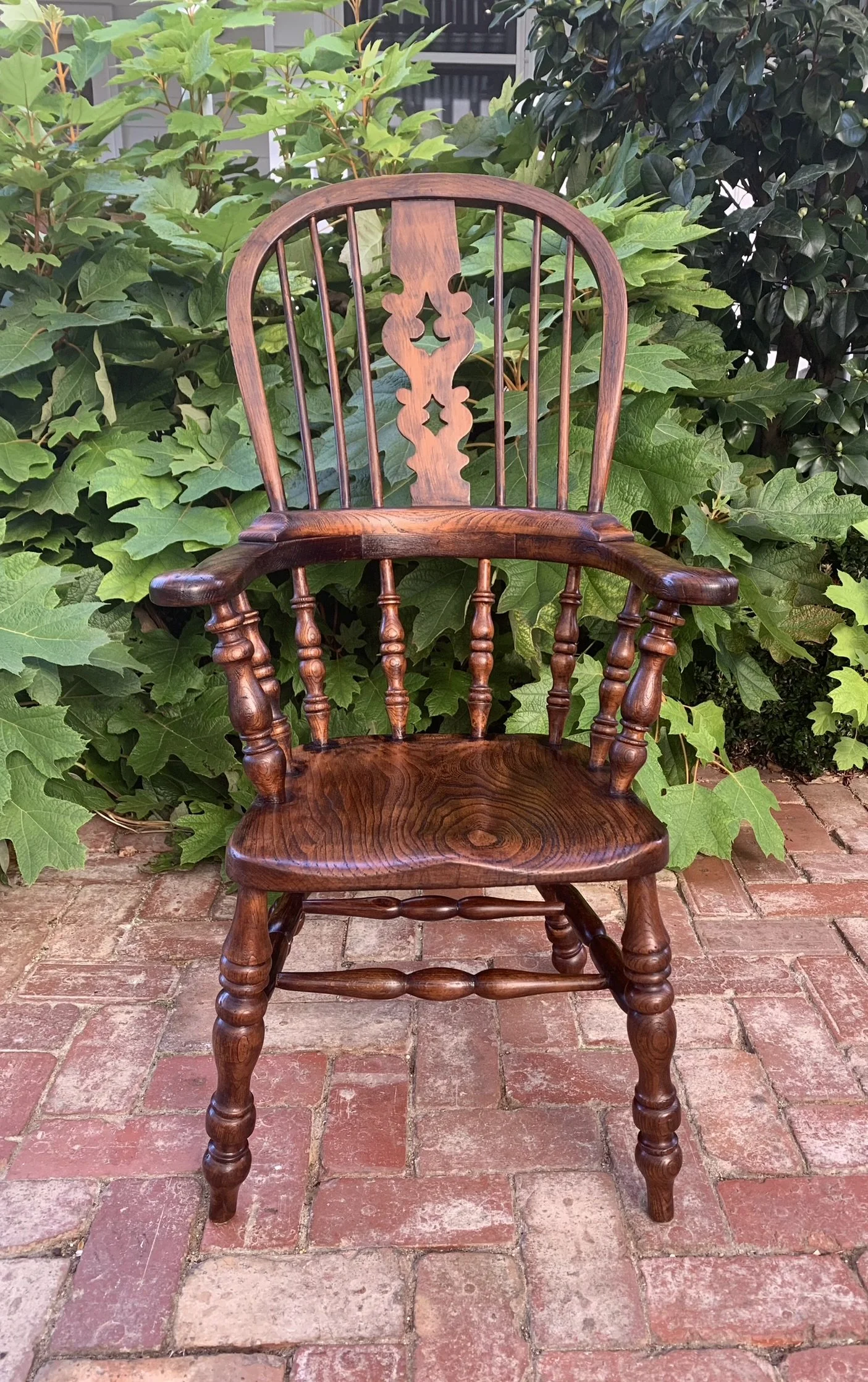
A handsome 19th century English Windsor armchair, generously proportioned with a broad, sweeping arm bow. The hooped back is fitted with a fretwork-pierced splat flanked by turned spindles, all rising from a wide, well-figured elm seat with rich, undulating grain patterning. The turned oak legs are joined by a double H stretcher, adding both stability and visual rhythm to the design. Elm was prized by chair-makers for its resistance to splitting, making it the traditional choice for Windsor seats, while the oak understructure lends strength to the legs and stretchers. The chair is in good condition, having taken on a deep, glowing patina to the arms and seat consistent with age and generations of use, with the elm's figuring particularly well displayed across the broad seat.
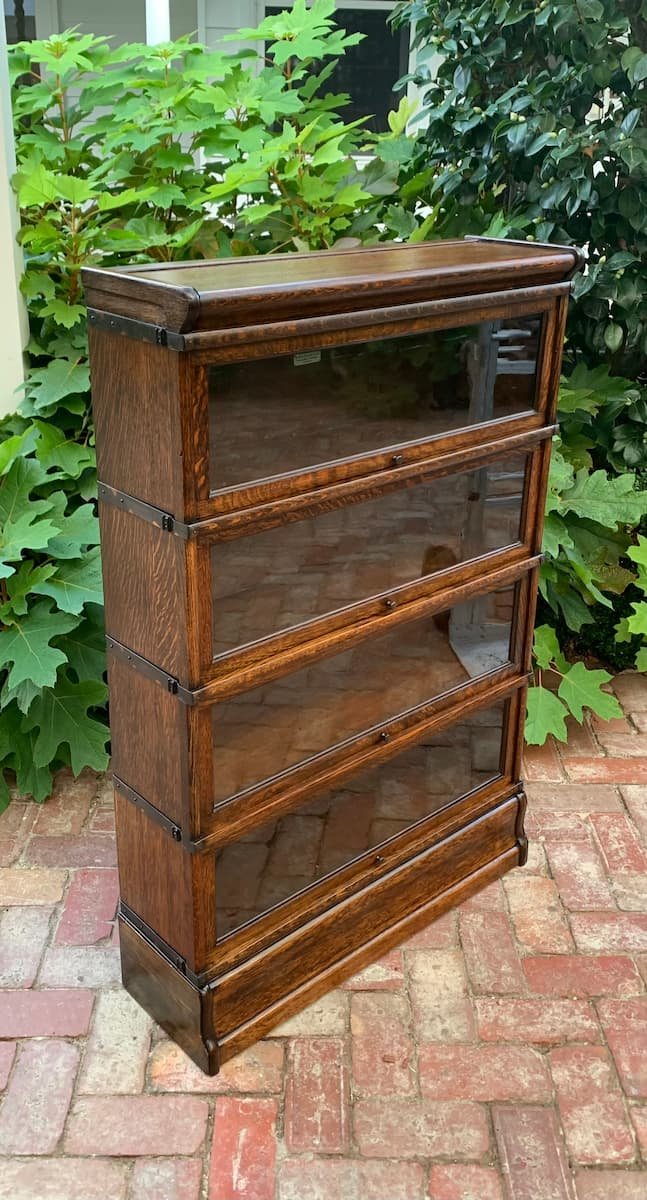
A quality four-section barrister bookcase by The Globe-Wernicke Co. Ltd, London, retailed as "Office & Library Furnishers," circa 1910. Constructed of quarter-sawn oak with a rich, warm patina, each of the four stacking sections has its original pull-up glazed door, sliding smoothly on the classic barrister mechanism. The moulded top has the shaped, rolled edge typical of the best English Globe-Wernicke production, and the case sits on a solid plinth base. The maker's ivorine label survives intact on the interior.
Barrister bookcases of this stacking type were designed so lawyers and professionals could add or remove sections as their libraries grew, and the sectional construction also made the bookcase easy to move between chambers or homes without disturbing a full library shelf. This example is in superb condition with wonderful figuring to the oak — tight joints, good original glass, and restored finish.
An excellent piece for a study, home office, or library, equally at home holding books or displaying collections behind glass.
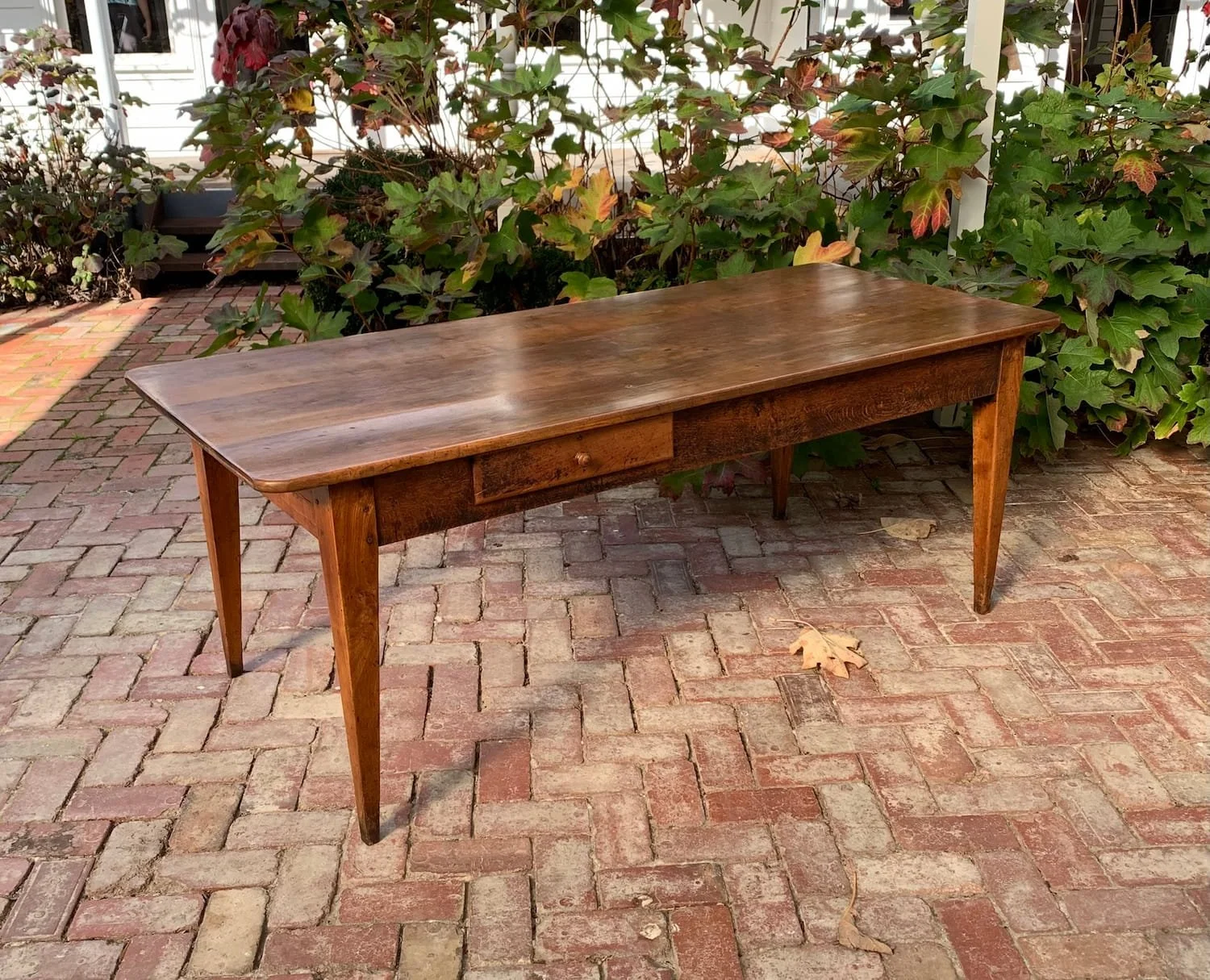
A handsome French farmhouse dining table dating to circa 1840, combining a solid cherry wood top with an oak frame and tapered legs — a construction pairing typical of provincial French cabinetmaking, where cherry was favoured for show timber and oak for structural strength and economy.
The top displays a rich, deep patina built up over nearly two centuries of use, with the honest surface wear, small stains and fine scratching expected of a genuine antique farm table rather than a reproduction. The rounded corners and gently tapered legs are hallmarks of the French provincial style, offering a softer silhouette than their English or Australian Colonial counterparts.
A single frieze drawer with a turned timber knob sits below the tabletop, useful for cutlery or linens. The standout feature of this table is its pull-out bread board (or pastry board) slide, fitted to one end frieze — a practical addition found on French kitchen and farmhouse tables, traditionally used as an extra work surface for rolling pastry or preparing bread. The slide retains its original, heavily worked surface, with decades of scoring, staining and wear that speak directly to its daily use in a working French kitchen.
This table would suit a country kitchen, farmhouse dining setting, or as a characterful writing or work table, and is equally at home as a practical dining piece or a striking, storied centrepiece.
Height: 760mm
Width: 205mm
Depth: 82mm
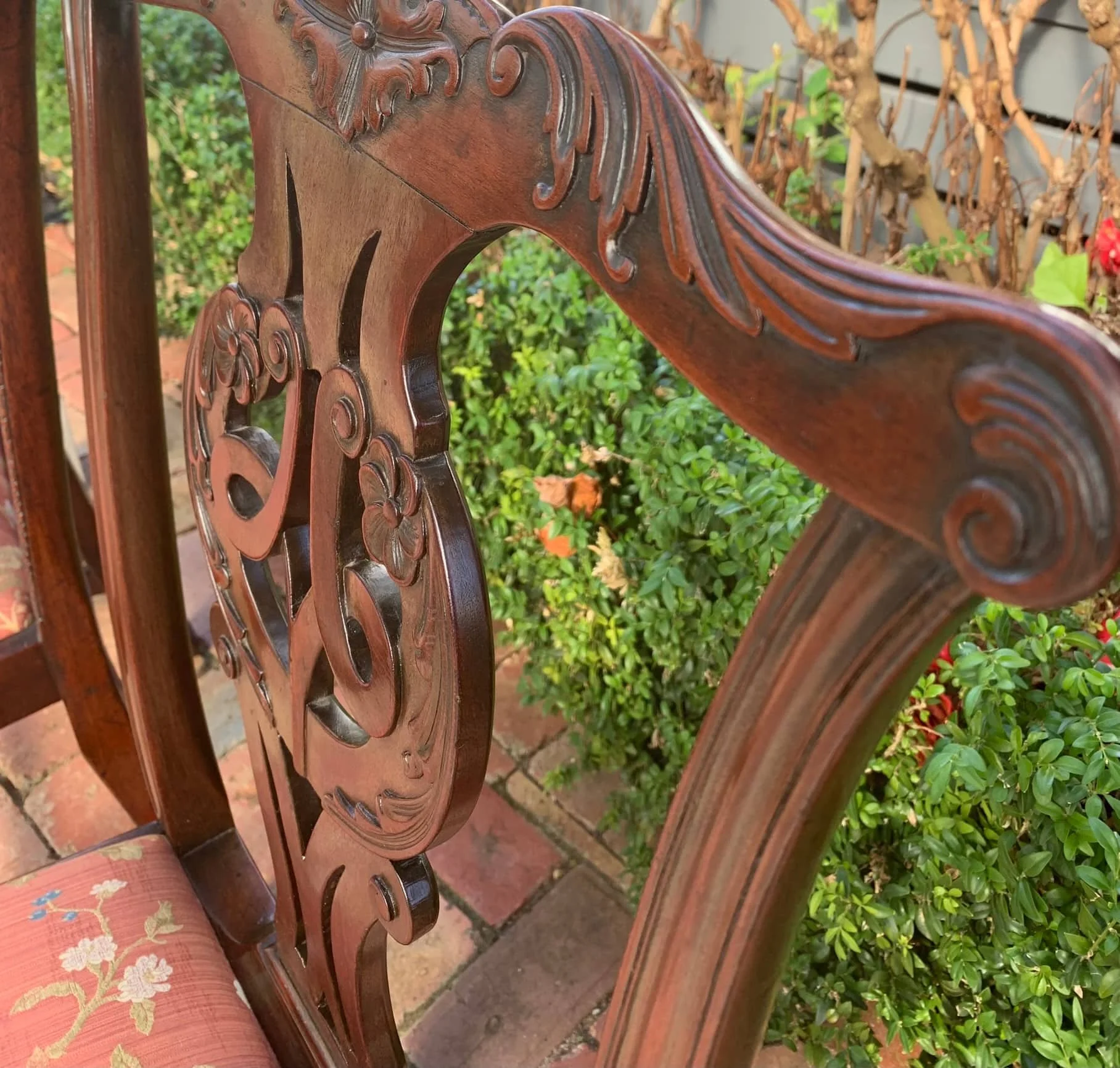
A Georgian Chippendale-style mahogany side chair, the shaped camel-back crest rail carved with acanthus leaf and scrolling ears above a pierced, interlaced splat carved with husks and paterae. Raised on square chamfered legs joined by an H-stretcher. The drop-in seat is upholstered in a chinoiserie-inspired floral silk fabric.
Lovely original condition throughout, with a rich, well-cared-for mahogany patina.
A well-proportioned occasional or dining chair, equally suited as a single accent piece or as part of a growing set.
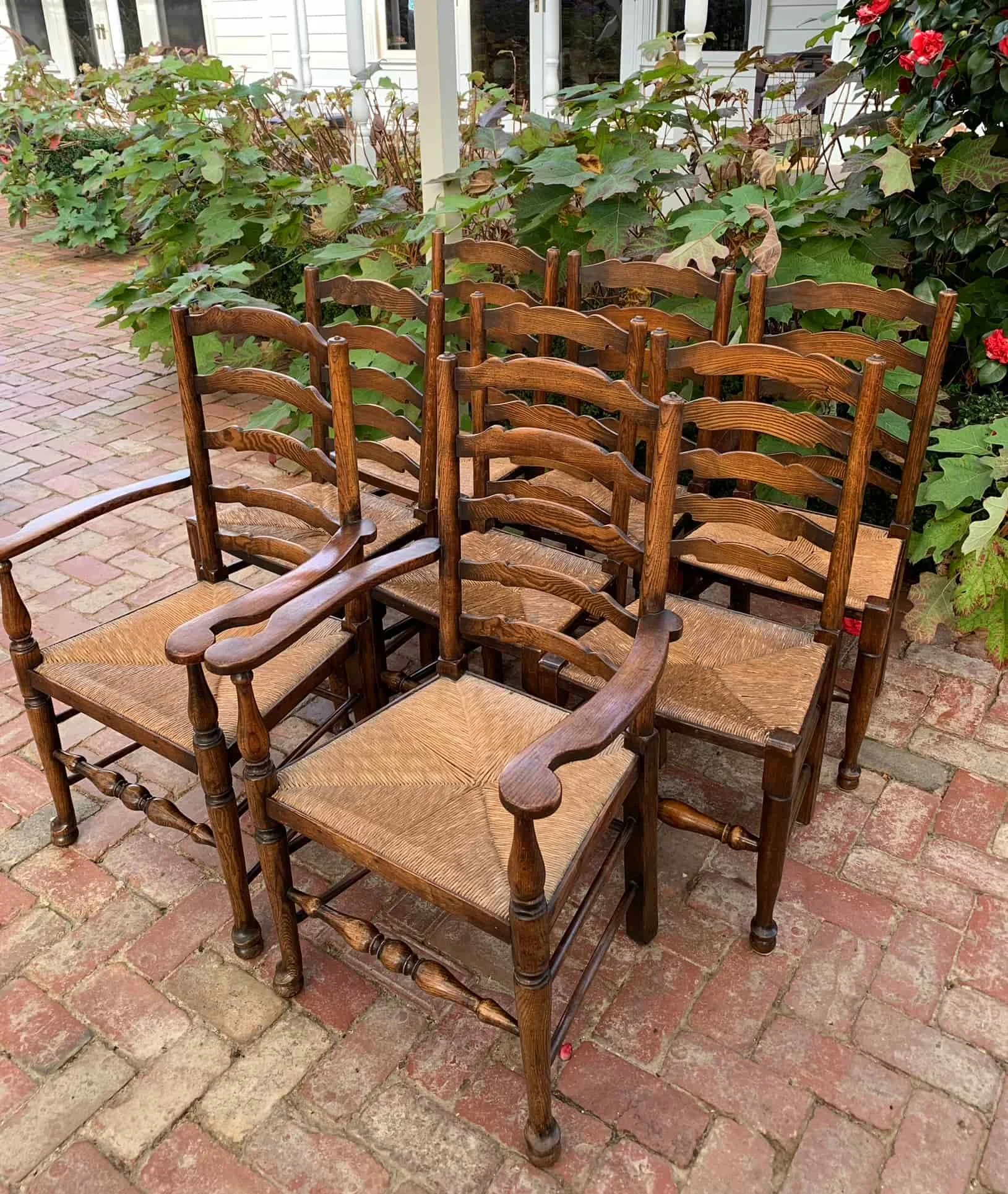
A fine set of eight antique English oak and ash ladderback chairs, comprising two carver armchairs and six matching side chairs, attributed to the Lancashire region and dating from c.1850. Each chair features the distinctive "wavy" or scalloped ladder-back form typical of northern English country chairmaking, with five shaped horizontal rails rising between turned uprights. The carvers have generous scrolled arms terminating on turned supports, while all eight chairs sit on turned and raked front legs joined by bold turned stretchers - a hallmark of this regional tradition. Each chair retains its original rush seat, hand-woven in the traditional herringbone pattern, showing good age and consistent colour throughout the set. The timber has a rich, warm patina built up over more than a century of use, with honest surface wear commensurate with age. Structurally sound and stable, this set is equally suited to a farmhouse kitchen, country dining room, or as a versatile mixed seating arrangement. A practical and characterful set, offering genuine 19th-century English country furniture at a scale (eight chairs) increasingly hard to find as a matching group.
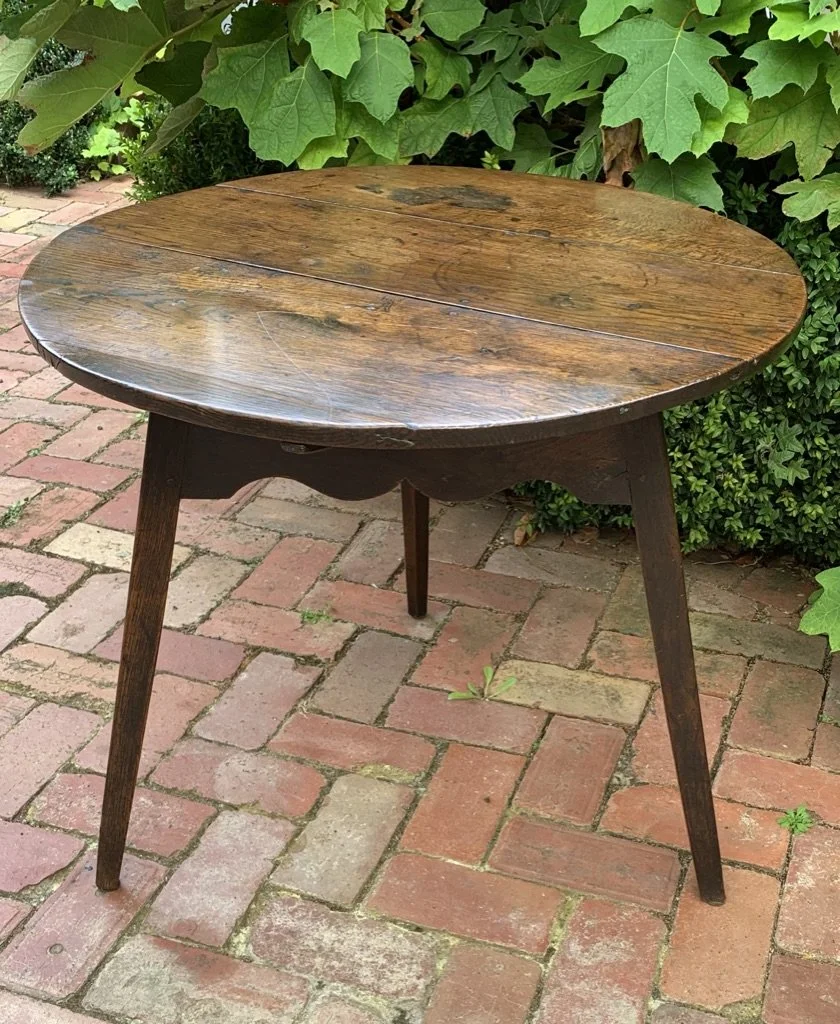
A wonderful and well-proportioned English oak cricket table, circa 1780, in good original condition with an honest, well-worn surface.
The oval top is formed from three boards of good figure, the oak now a rich warm brown with characteristic age marks, old staining, and the fine grain texture that develops only over centuries of use. The three square-section legs taper cleanly to the foot — a Georgian refinement on the heavier turned legs of earlier examples — and are joined by a shaped apron with a scalloped lower edge, adding a note of decorative interest to an otherwise utilitarian form.
Cricket tables of this type were made throughout rural England for use in the home and kitchen, their three-legged construction ensuring stability on uneven stone floors. This example has the slender proportions and refined leg detail that place it in the later 18th century.
Surface wear and patination are consistent with age and use. The top retains its original surface; the joints between boards have opened slightly with age, as expected. A characterful and genuinely useful piece.
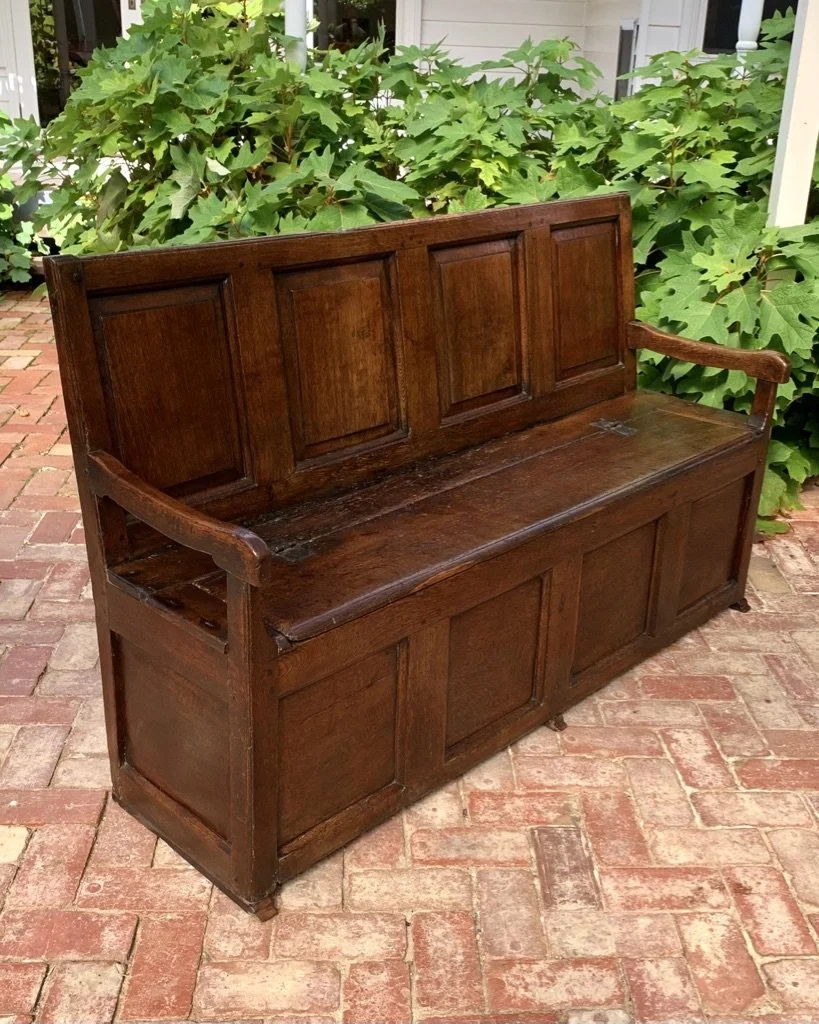
Rare Welsh oak box settle C.1700-1740, the four panel back with a lift up seat revealing a deep storage compartment. The front is fitted with four panels raised on original sledge feet. The arms are simply shaped with a pleasingly worn chamfered profile. The piece retains an ownership brand "T.W." to one stile.
Originally designed for the farmhouse hall, inn or tavern - a place to sit by the fire, away from the draught, with storage below - the box settle translates naturally into a contemporary hallway, mudroom or entry.
In very good period oak condition with a rich warm brown colour and exceptional patination. Retaining its original hand wrought iron seat hinges, boarded base and backboards, it is sound and stable throughout.
Height: 1040mm
Width: 1700mm
Depth: 510mm
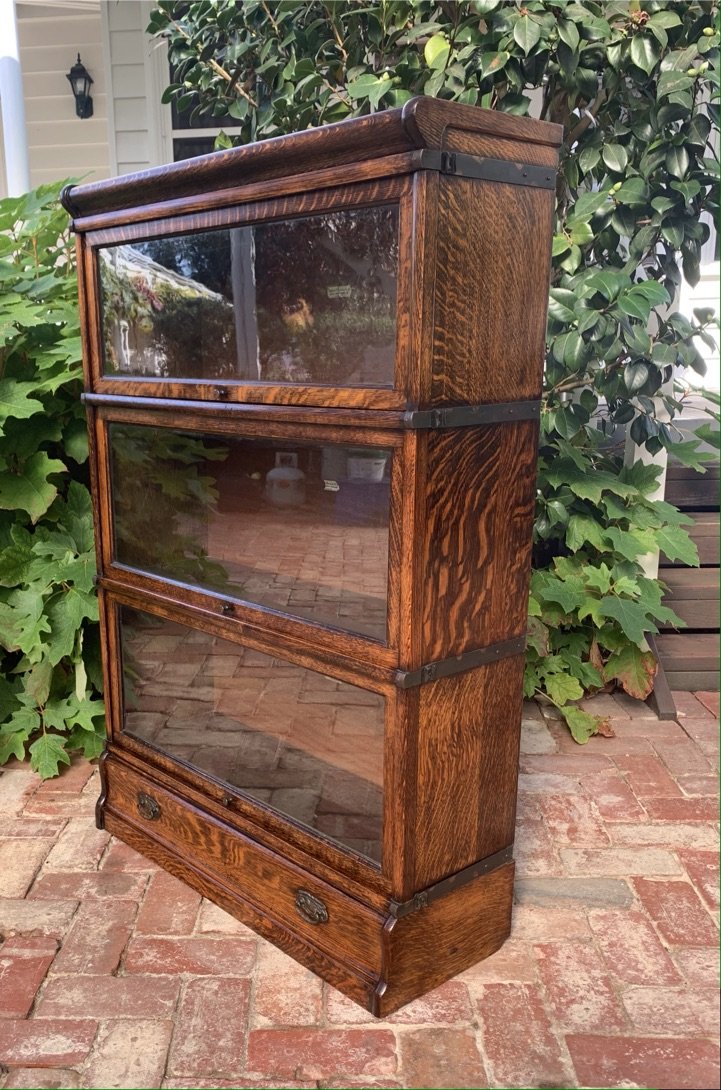
A Good quality early 20th century Oak Globe Wernicke stacking bookcase with three sections each with up and over glazed doors with metal strapping and a lower drawer. Each section retaining its original makers label and metal side strapping. In excellent condition with a nice colour and excellent figuring to the Oak grain.
Height: 1120mm
Width: 870mm
Depth: 270mm
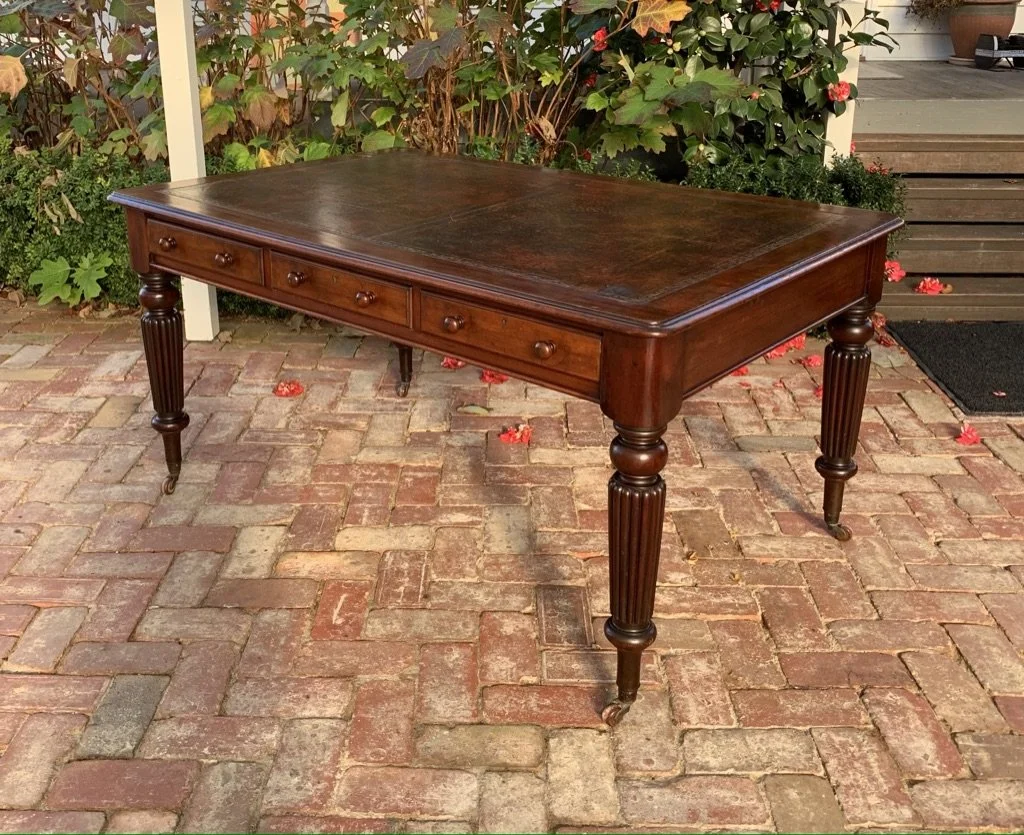
A superb Victorian mahogany library table, circa 1850–1860, of a type made for the studies and country house libraries of the mid-nineteenth century. The top is inset with a large panel of hand-coloured, gilt-tooled leather with a foliate border, now richly patinated with the wear and markings of long use. Three drawers are fitted to each long side, each with turned mahogany knob handles, the central drawer to the front retaining its original lock. The frieze is moulded and cleanly proportioned. The table stands on four reeded and turned tapering legs with collar detail, raised on original brass castors. The form and leg treatment are characteristic of the better-quality London and provincial cabinet work of the William IV to early Victorian transition.
Height: 775mm
Width: 1510mm
Depth: 990mm
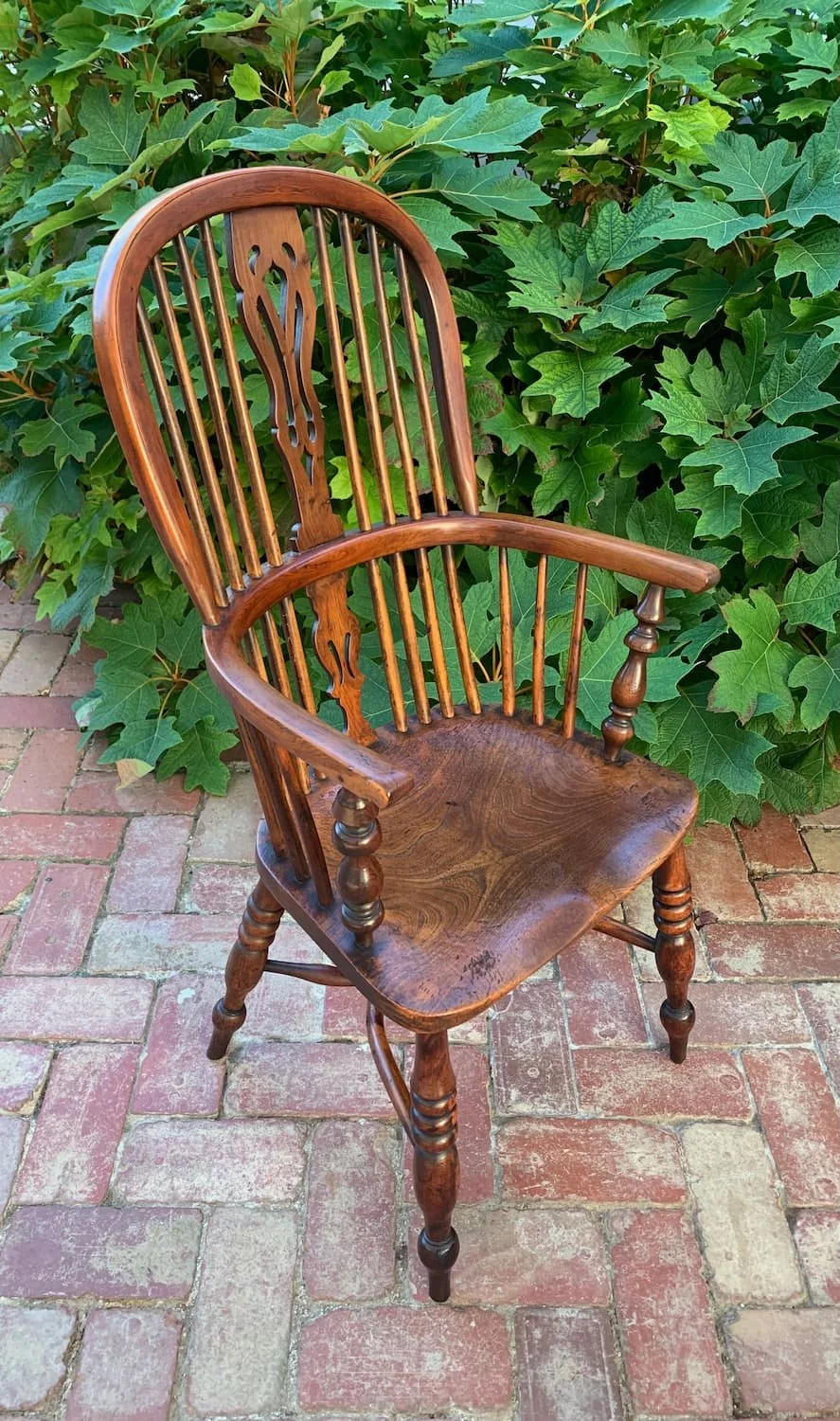
A fine and well proportioned English Windsor armchair C.1840. The chair features a nicely figured saddled elm seat, paired with a pierced yew-wood splat, hoop back and arm rail. The back is constructed with turned yew-wood spindles - a sign of quality - and stands on turned legs united by a crinoline stretcher.
A lovely quality, honest Windsor with all the hallmarks of higher-quality provincial English chair making.
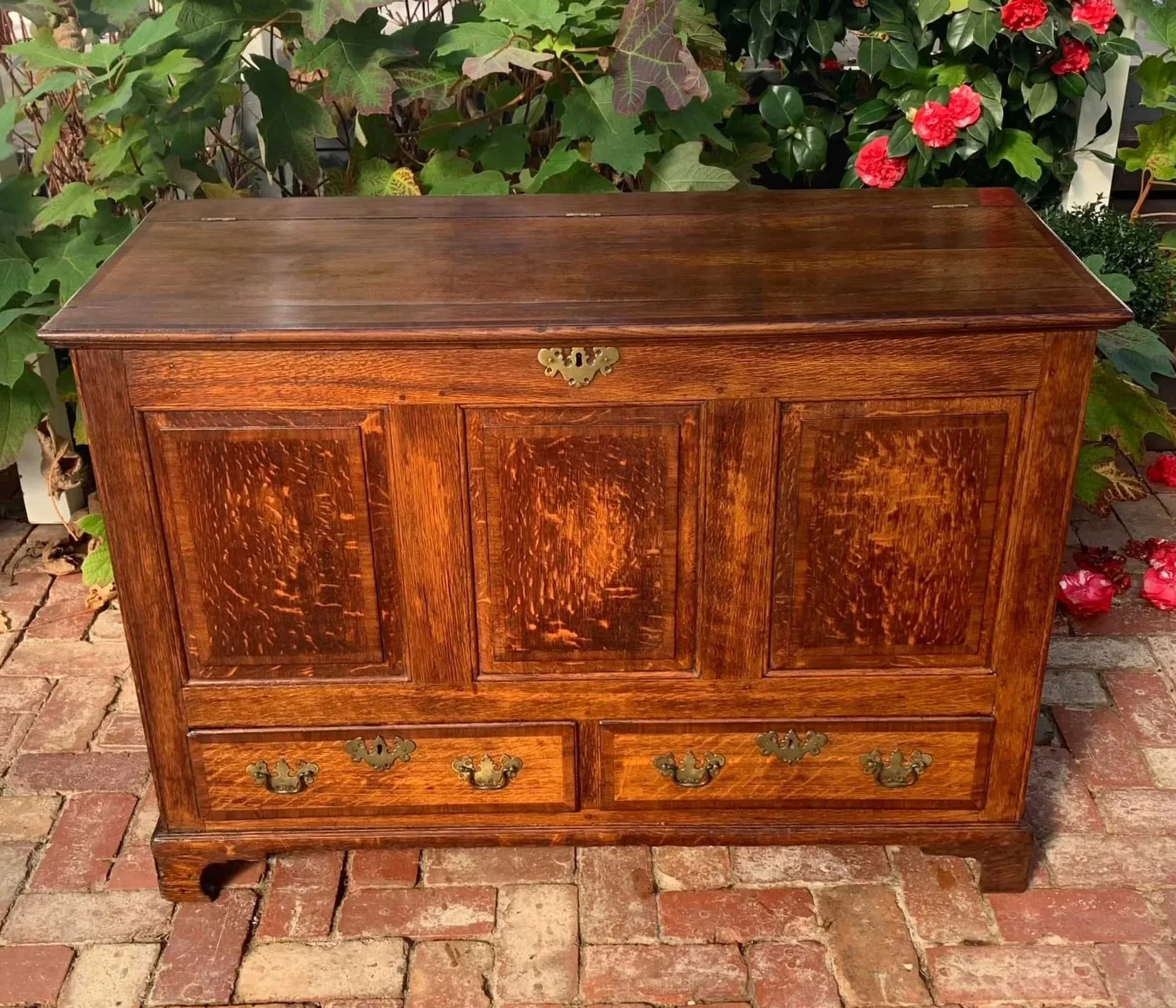
A handsome Georgian oak mule chest, the hinged three-plank top and three fielded oak panels to the front crossbanded in mahogany, continuing to the two "slipper" drawers below — a hallmark refinement distinguishing the mule chest from the plainer coffer or blanket box. Standing on shaped bracket feet, the piece retains its original brass hardware throughout, including the shaped rococo-pattern swan-neck handles and pierced escutcheons to the lid and drawers. The lid lifts to reveal the original internal candle box/till, a practical fitted compartment typical of the form and a feature collectors look for when assessing originality. The oak displays attractive figuring with good colour and patina consistent with age. A versatile piece equally suited as a blanket chest or hallway storage — also functions as a linen press, sideboard, or entryway trunk.
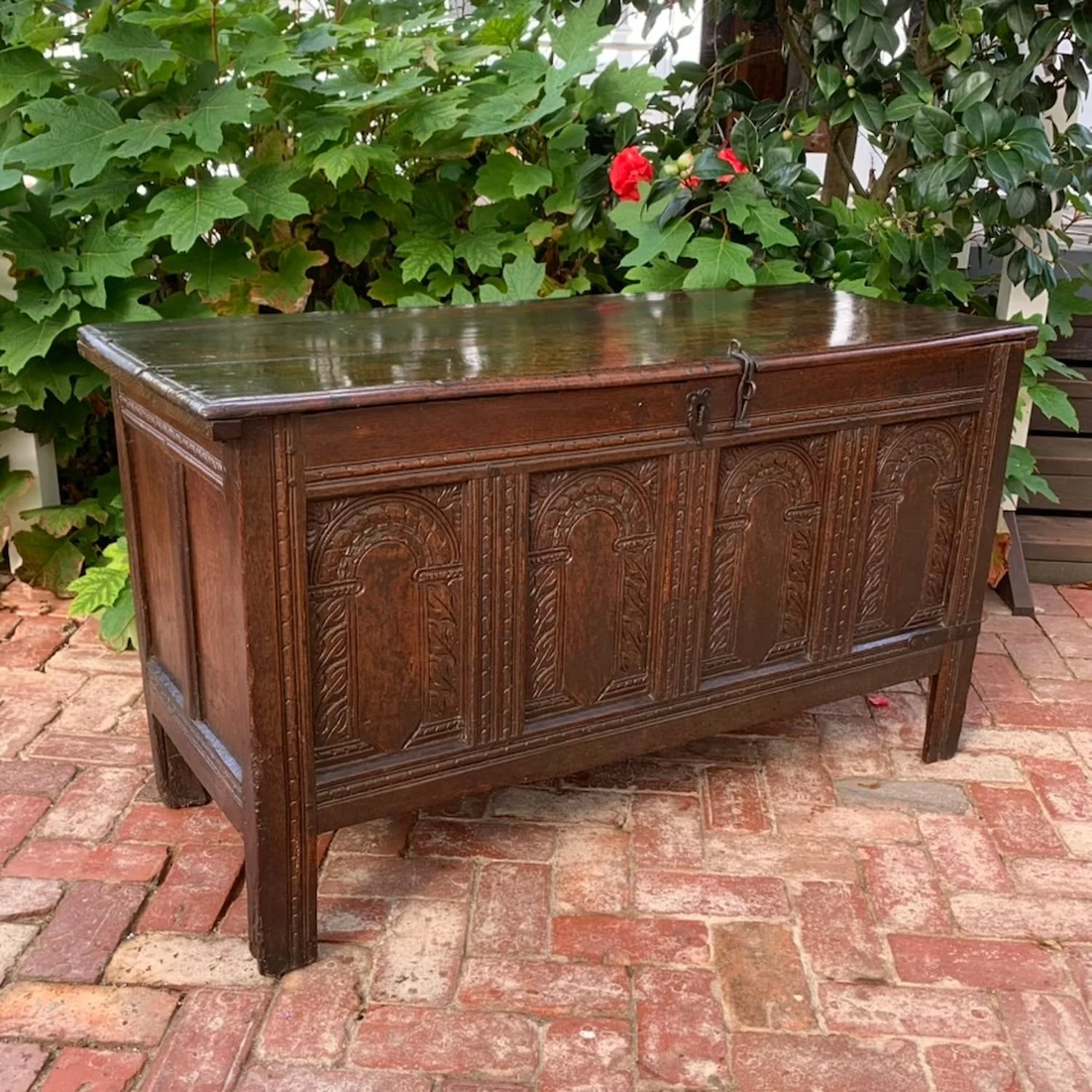
A substantial English oak coffer, the four-panel front carved throughout with blind arcading — rounded arches with flanking pilasters, acanthus leaf spandrels, roped stiles, and nulling to the frieze rail.
Frame-and-panel construction with pegged mortise-and-tenon joinery. The planked lid top retains its original wrought-iron snipe-bill hasp and escutcheon; iron strap hinges to the rear. Two old repairs are present: a steel reinforcing strap to the lid underside and steel strapping to a lower front corner — practical 19th-century interventions. Plain back and end panels; iron chain lid stay a later addition.
A lovely rich dark honey-brown patina with good age character consistent with 17th-century origin.
Height: 775mm
Width: 1370mm
Depth: 565mm
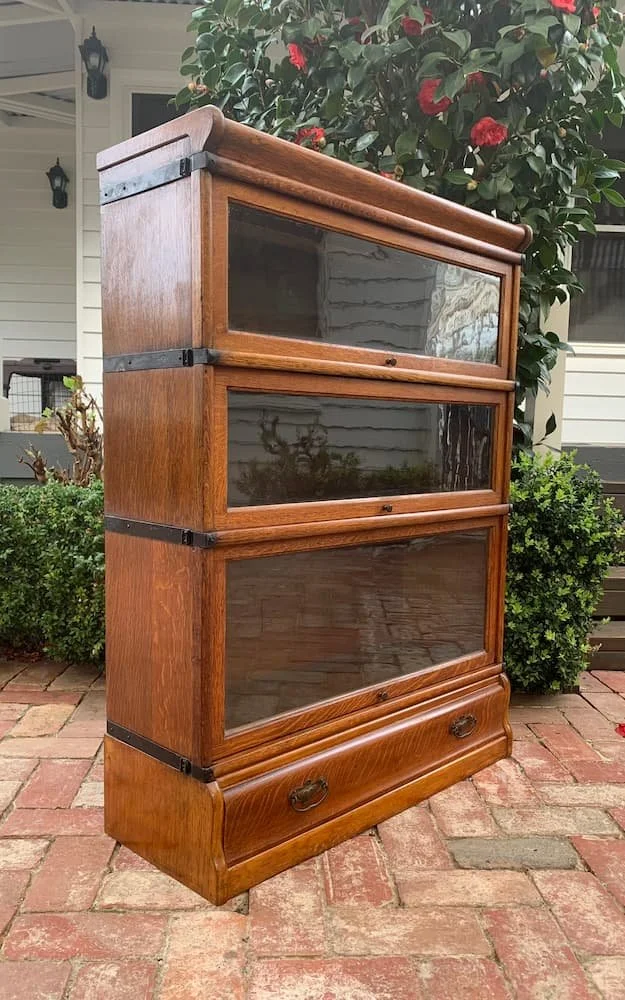
A handsome English oak Globe Wernicke stacking bookcase, Circa 1910. Constructed in three sectional tiers, each with a lift-up glazed door sliding on the classic barrister mechanism, sitting above a shaped base fitted with a single drawer and brass swan-neck handles. The moulded cornice top and panelled sides are typical of the maker, with black iron strap hinges joining each section for easy stacking and disassembly.
Finished in a lovely golden oak colour with strong figuring to the quarter-sawn timber, the piece presents in excellent condition throughout — sound joints, original glazing, and a well-preserved finish with only light, honest wear consistent with age. The sectional construction allows the bookcase to be moved or reconfigured section by section, the hallmark feature of the Globe Wernicke system.
A versatile piece equally suited to a study, library, or living room, offering genuine antique character with the practicality of a barrister/sectional design.
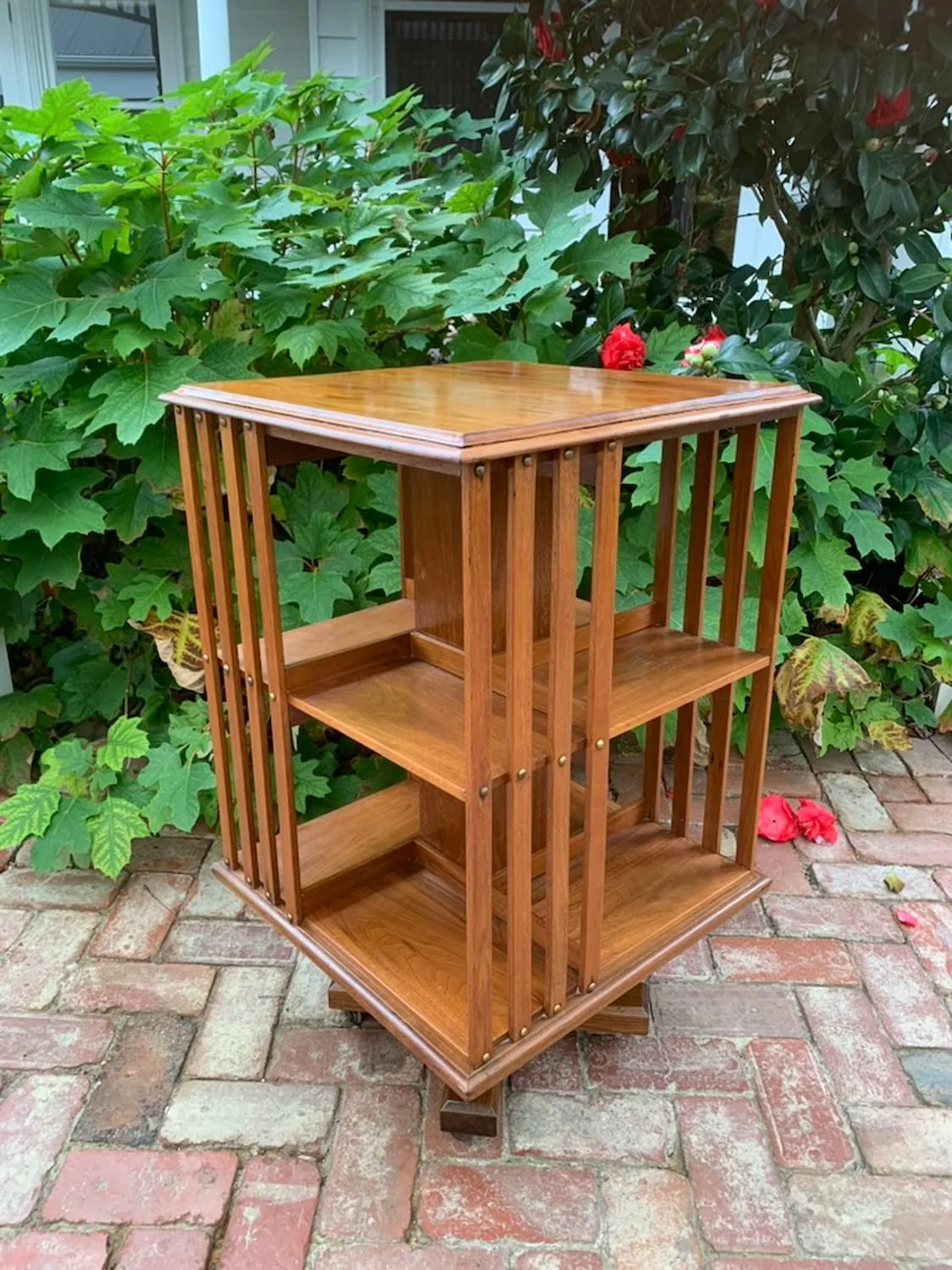
A well-proportioned English Edwardian revolving bookcase in walnut, circa 1910. The square moulded top sits above two generous tiers of open shelving, the uprights detailed with brass studs throughout. The whole rotates on a cruciform base fitted with original castors, allowing access to all four sections.
The walnut displays good colour and grain, warm and even across the top. The piece is in good condition commensurate with age and use, with the mechanism turning freely.
A highly functional piece that works equally well in a study, library, or living room.
Height: 955mm
Width: 560mm
Depth 560mm
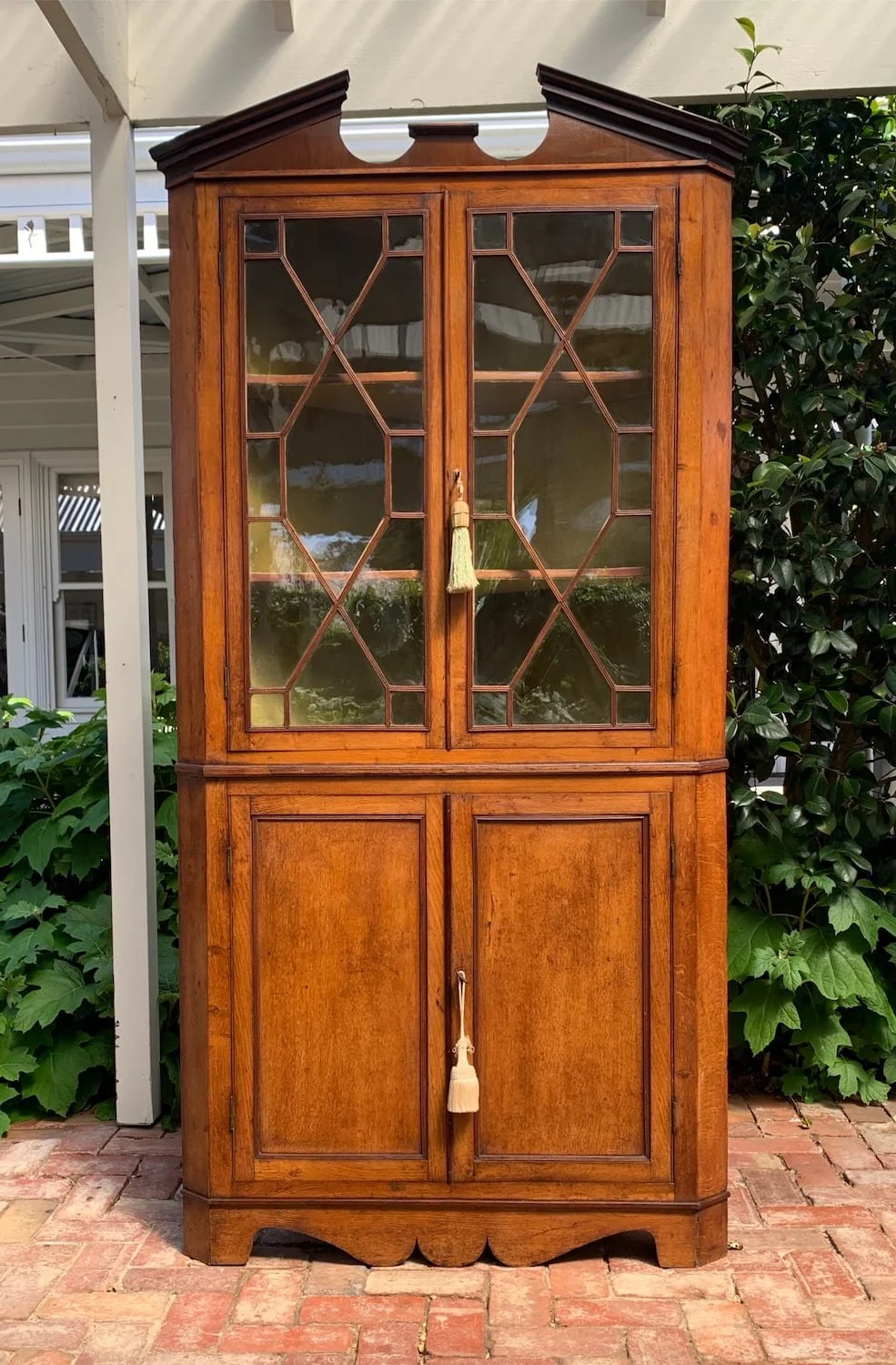
Attractive and practical late 18th Century English Georgian country Oak corner cabinet. The top section features a broken arch pediment and astragal glazing opening to shaped interior shelving lined in an aged green baize. The lower section offers additional storage behind panelled doors, all raised on a shaped bracket base with a nicely shaped apron.
The oak retains a warm, mellow patina, a classic and practical piece of country house furniture.
Height: 2200mm
A delightful Georgian Oak fall front bureau C.1730. Raised on bracket feet with an arrangement of two short over two full length drawers, the interior has pigeon holes and drawers with a sliding well. A lovely early bureau of smaller proportions with good patination and colour.
Height: 980mm
Width: 840mm
Depth: 490mm